The Keys to Life, Found in a Rock
We went to an asteroid, brought a small piece of it back, and found the keys to life as we know it inside it.
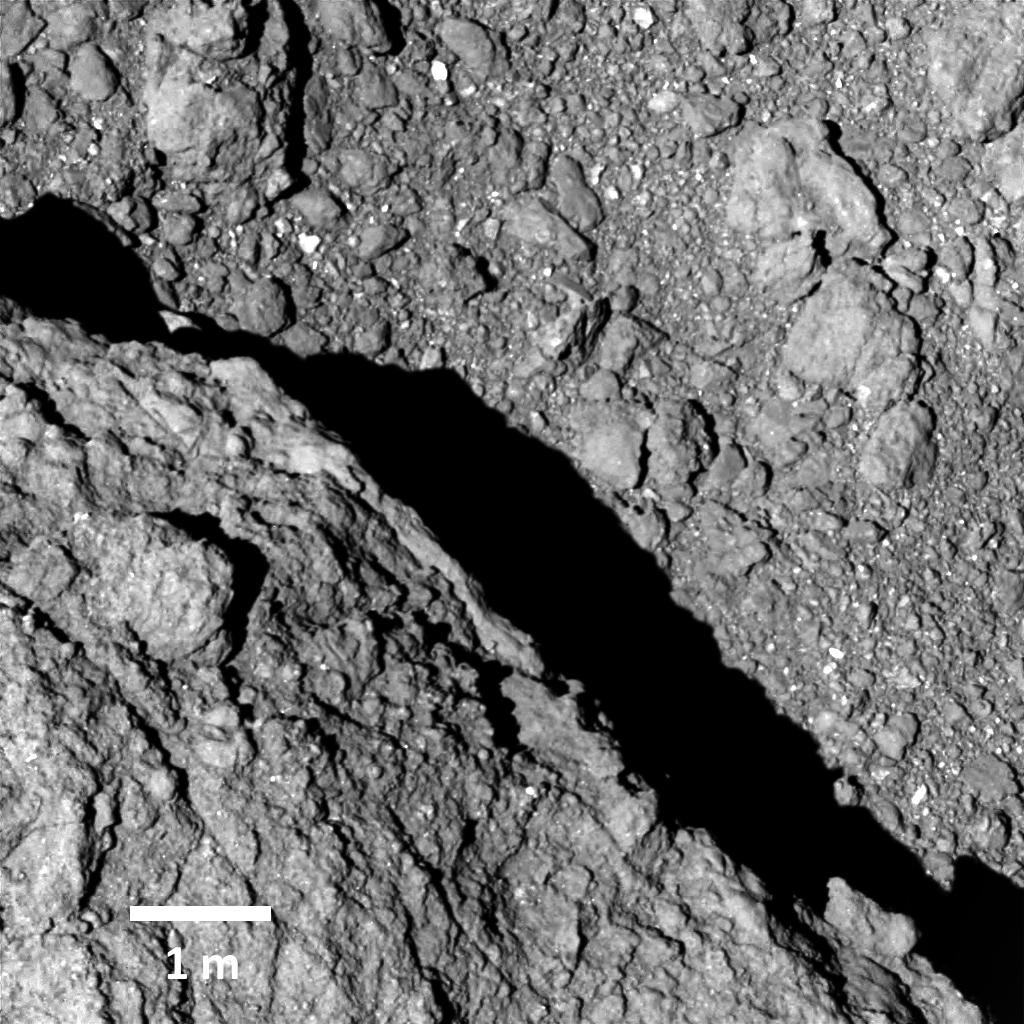
The asteroid is Ryugu, a dark, carbon-rich rock about 900 metres across that orbits the Sun between Earth and Mars. The Japanese Hayabusa2 spacecraft visited it in 2018, landed twice, and returned a tiny sample to Earth in 2020. Researchers have been picking through that sample ever since, and this week a paper in Nature Astronomy confirmed something significant: all five nucleobases, the molecular components that carry genetic information in DNA and RNA, are present in the Ryugu samples.
All five of them: adenine, guanine, cytosine, thymine, uracil.
These aren’t exotic molecules. They’re the fundamental units of heredity. Every living thing on Earth uses them. Your DNA is built from sequences of these five bases, as is the DNA of every bacterium, every plant, every blue whale, every virus. They are, in the most literal sense, the basis of all known life.
And we just found them on a rock from space.
This isn’t quite the first time. All five nucleobases had already turned up in carbonaceous meteorites, the ancient, carbon-rich space rocks that occasionally fall to Earth. The Murchison meteorite, which landed in Australia in 1969, has been a goldmine for this kind of analysis for decades. But meteorites have a problem: they’ve been sitting on Earth, potentially contaminated by the environment around them. Ryugu is different. Those samples were collected in space and returned in sealed containers, pristine, untouched by Earth’s atmosphere. The contamination question largely goes away.
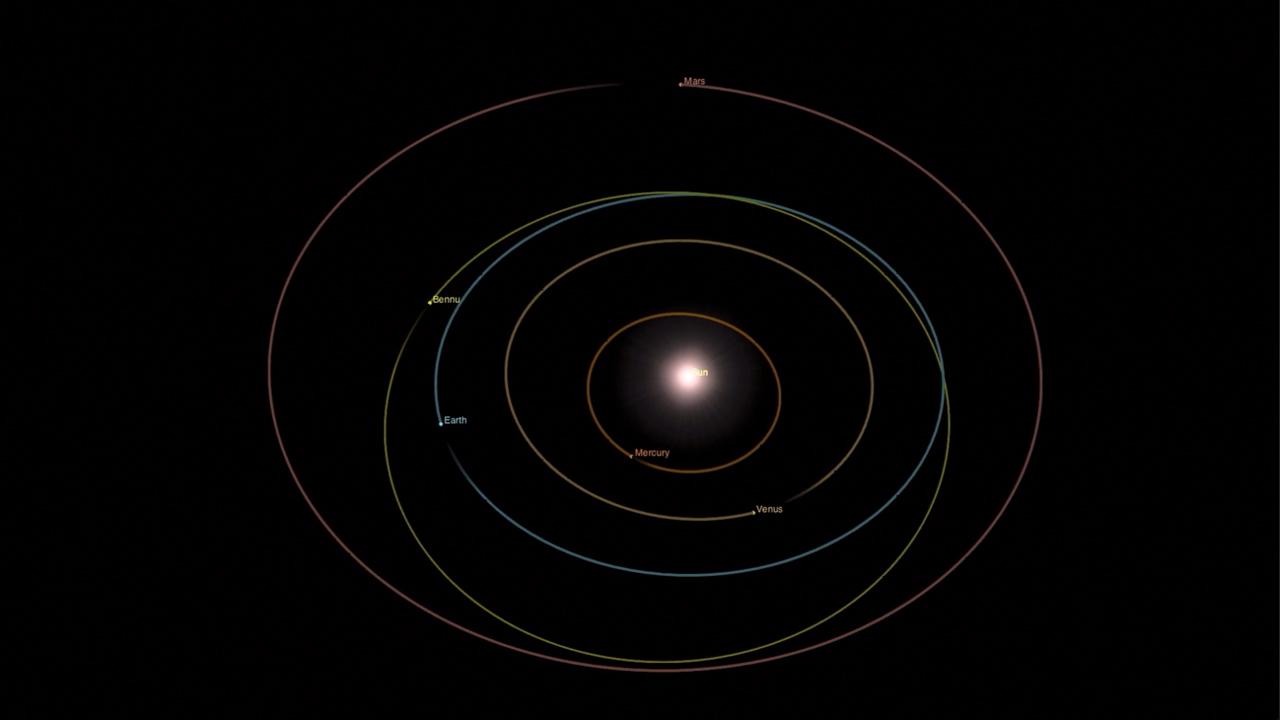
NASA’s OSIRIS-REx mission found the same thing in samples from the asteroid Bennu, announced late last year. Two different asteroids, two different space agencies, the same result.
The 3I/ATLAS result this week adds another layer. 3I/ATLAS is an interstellar comet, only the third object ever detected passing through our solar system from somewhere else entirely. ALMA, the huge radio telescope array in Chile, observed it last month and found it packed with methanol at levels higher than almost any comet we’ve ever seen from our own solar system. Methanol is a simple organic molecule, a building block further down the chain, but finding it in such abundance in a visitor from another star system is a useful reminder: this chemistry isn’t just happening here. It’s happening out there too.
All of this has implications for one of the most contested numbers in science. The Drake equation is a famous attempt to estimate how many communicating civilisations might exist in our galaxy. Most of its variables have become much better constrained over the years, thanks largely to exoplanet astronomy. We now know that planets are extremely common, that many stars have them, that a good fraction sit in habitable zones with the right temperatures for liquid water. Those terms have shifted in a direction that suggests life might not be as rare as we once feared.
But one term has always been the hardest to pin down: fl, the fraction of suitable planets where life actually gets going. We have exactly one data point. Earth. We know it happened here. We have no idea how likely it is in general.
What the Ryugu results, and the Bennu results, and the meteorite results, and 3I/ATLAS all have in common is that they move that number. Not definitively, not conclusively, but they push it. They suggest that the molecular preconditions for life are not rare, not special, not a peculiar accident of Earth’s chemistry. They appear to form naturally in space, on asteroids, in comets, perhaps drifting between solar systems on interstellar visitors. The universe, it seems, is quite good at making this stuff.
Does that mean life is everywhere? No. Having the ingredients doesn’t guarantee the dish. There’s still some step between ‘a rock with nucleobases on it’ and ‘a self-replicating organism,’ and we don’t know how hard that step is. It might be vanishingly unlikely even given all the right ingredients. That’s the counterargument, and it’s a legitimate one.
But if you found the ingredients for a cake spread liberally and consistently throughout the universe, you’d be genuinely surprised if the universe turned out to contain no cakes. You’d want a very good reason for the absence.
Maybe that’s just the human need to feel special reasserting itself. Maybe we want there to be a spark, something unique, something that didn’t just happen automatically wherever the conditions were right. I find I’m not too worried about that. A universe full of life, seeded by the same molecules turning up in the same rocks across billions of years of cosmic chemistry, seems more wonderful to me, not less.
Comments
Loading comments…
Leave a comment